 Quiet Change
Alexander Technique with Greg
Are you ready for something to change?
Maybe you want to be in less pain or live life more fully? Maybe you feel like you're stuck in a rut? Or do you just keep asking 'Is life supposed to be this hard'?
This is where quiet change comes in. Alexander Technique lessons teach the skillset of quietness in mind and body. Through this we find agency and enable long-lasting change.
Quiet as a goal:
- Quiet as a state of being. Nurturing a less reactive nervous system that is able to fully, but not over-, respond to the world.
- Quiet as 'being content'. In an ongoing process of change where we try to become fuller, better versions of ourselves, we also need self-compassion and acceptance for wherever we're currently at.
Quiet as a means towards change:
- When we dedicate time to be in relationship with ourself, we can embrace quiesence and see what new growth emerges.
- When it comes to change, we can try to push through with effort and force. But this can be hurtful, or we might find old patterns snapping back into place.
- Quiet as thoughtfulness and care before action. Not a purely intellectual thoughtfulness, but one that comes from an undivided mind-body that responds intuitively with what the situation calls for.
- Quiet as an alert guard who is in it for the uneventful long haul but ready to jump into action if the situation calls for it.
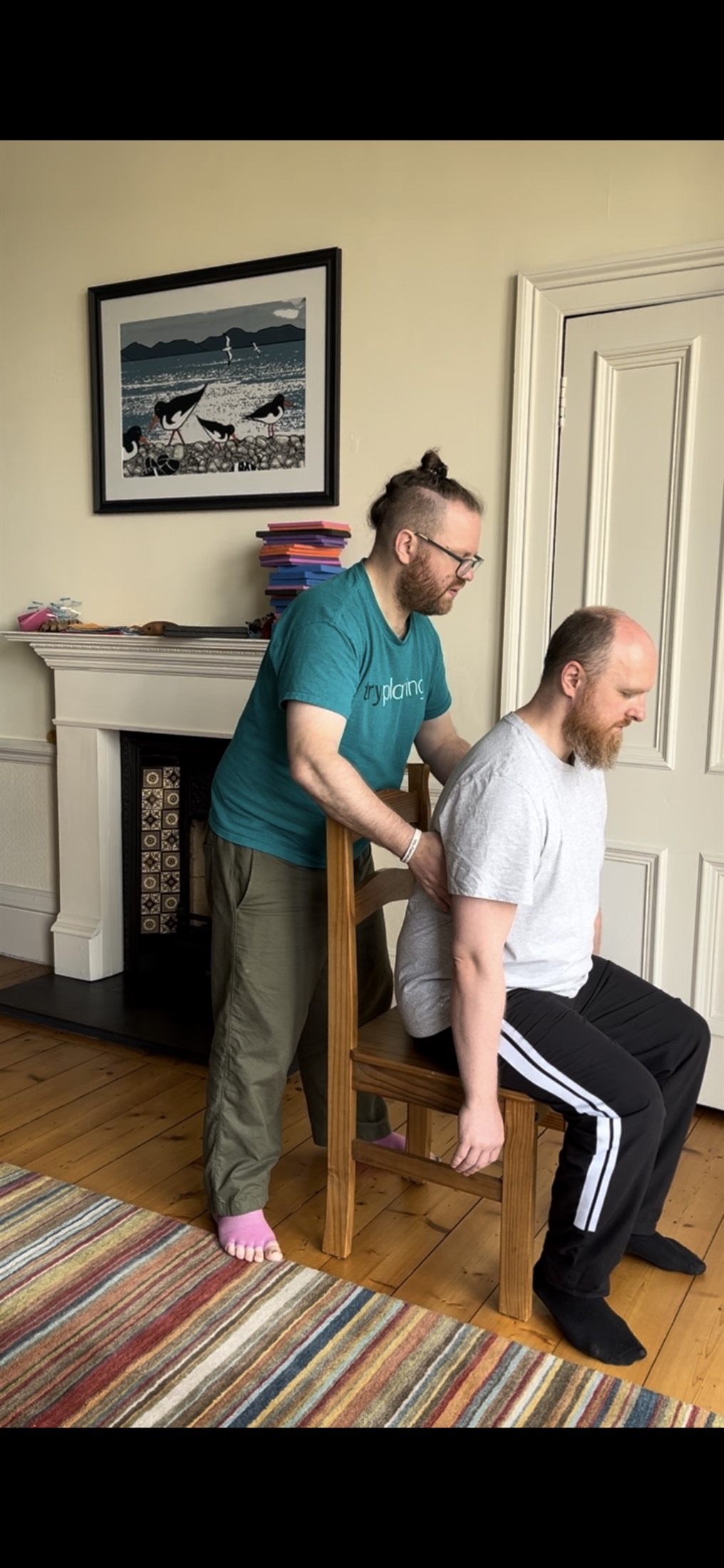
Alexander Technique lessons combine mind-body cueing, verbal instruction, and co-regulation through presence and touch. In a session we explore together what it means "to come to quiet" as a version of ourselves that is unified in mind and body. From there, we discover what is possible. Not theoretically, in the future... Practically, right now! At first an unexpected lightness and ease of movement will emerge. As we work deeper together, you will have a sense of safety and agency in relating to the world. And you can then go out there and do... whatever is most meaningful to you.
About You
You do something skillful and important (dancing, knitting, climbing, playing music, performing, running, thinking, parenting, helping, cooking, fixing, making, working...) and wish you could do it better, with greater enjoyment and ease. You've tried quickfixes and lifehacks and they give a superficial sense of "better", but they don't last, they don't feel fulfilling, and you now have an endless checklist of all the things you "should" be doing.
In fact, you probably do many skillful and important things, not just one. The Alexander Technique is a skill for working on skills. This is why it can help answer questions in many areas of life:
- As an athlete, could you perform better?
- As someone who uses their body, could you be in less pain?
- As a performer, could your performance be more authentic?
- As a coach or therapist, could you connect more with your clients without getting burnt out?
- As a team member, can you be the unflappable one that others rely on?
- As a philosopher, what does it mean to have agency? to have an embodied mind?
- As a neurodivergent person, can you easily transition from masked to unmasked and back again?
- As a spoonie, could the necessities of daily life cost less spoons?
- As a parent, can you help your kids manage a difficult day when you're having a rough day of your own?
- As a stranger in a strange land, can you fit in without losing what makes you... you?
- As a human in a difficult world, could you make a greater impact if you had greater resilience?
About Me

I'm Greg. I'm an Alexander Technique teacher. I am also (or have been) a software engineer, a team facilitator, a researcher, a social dancer and teacher, a ski racer and instructor, a singer, and a flute player.
After five years of the Alexander Technique popping up in various aspects of my life, I decided to find myself a teacher. The coffee after my first lesson was the best I've ever had (or at least I was present to enjoy it in a new and delightful way)! Then my dancing progressed in leaps and bounds after years of plateau. To my surprise, I became both more open-minded and more confident in my own opinions, able to listen more and interrupt less in both my personal and my professional life. People around me noticed that I was still as passionate about sharing the things that are important to me, but that I was much more centered and chill.
I'm at my best when I'm bringing out the best in others. I've been social dancing for over 20 years and have been interested in mind-body modalities for the last 15. I chose to train in the Alexander Technique because its rigorous training (1600h over 3 years) asks me to work on - and take care of - myself as the main way of helping you.
The Alexander Technique and I also bring out the best in each other:
- I don't try to impose a pattern
- I don't try to diagnose or fix you
- I don't push you further than you're ready to go
- My work is attuned to your response
- I allow my intuition and my analytic skills to go hand in hand
- We start with where you are today, and what you already know
- I teach you the skills so that you can become autonomous with the Alexander Technique
You can find me on Instagram and Facebook. I also created Alexander Elephant as a way to explain the many aspects of the Alexander Technique.
Let's Work Together
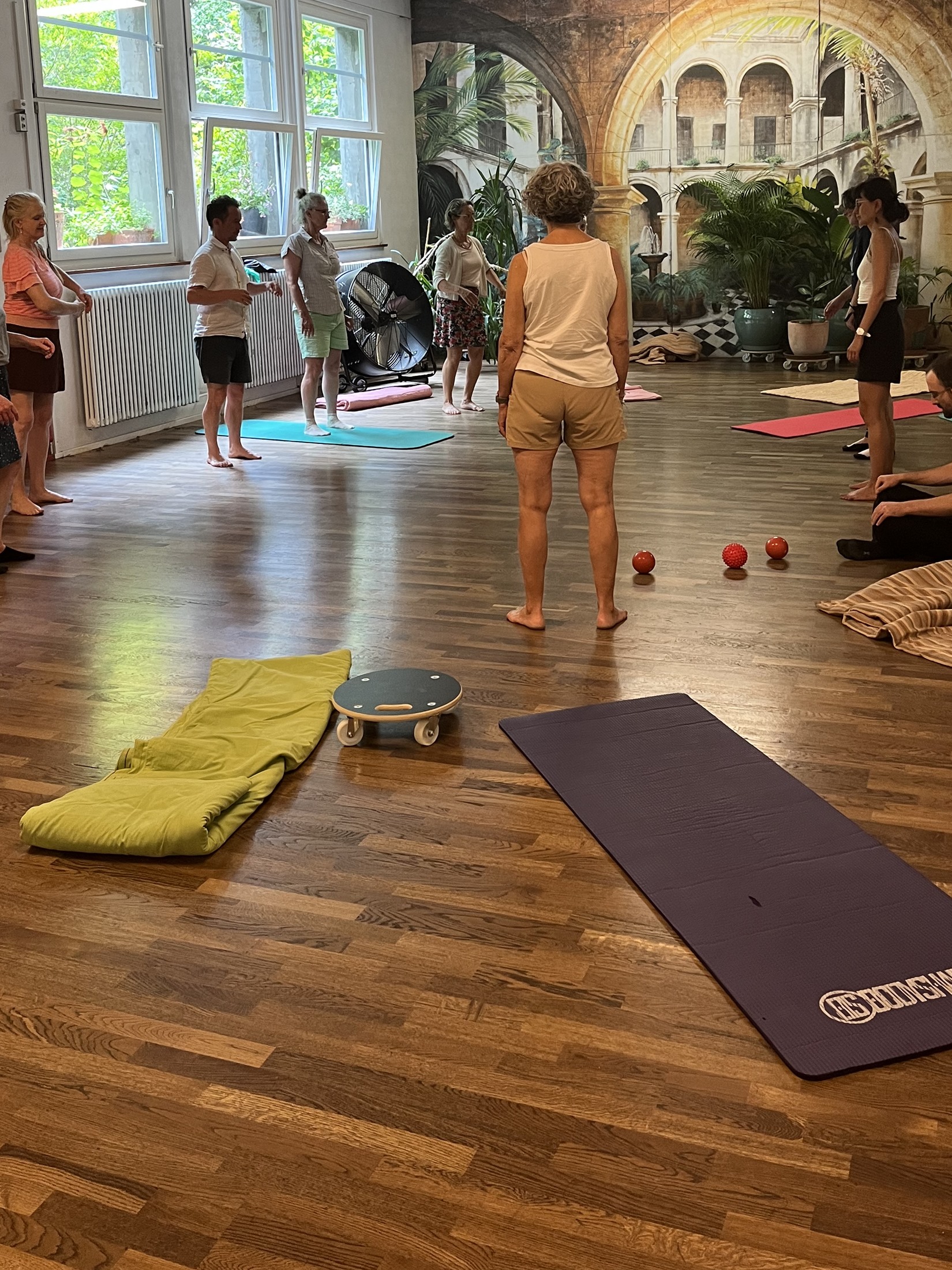
I am available for individual lessons in person in Edinburgh (Newhaven) or online. You can also hire me to teach group classes and workshops.
I prefer to work with people in blocks of 10 weekly (or more frequent) lessons. This is long enough for change to be seen, but short enough that we can focus on a goal of yours and aim to wrap up and send you on your way with a new skillset and a new understanding of yourself. You can always come back for another block later.
A lesson is typically 1h for a first lesson and 30mn for subsequent lessons. I charge the following rates:
- £50 for a single lesson (including the first 60mn lesson)
- £200 for a block of 5 lessons
FAQ
What is an Alexander Technique lesson like?
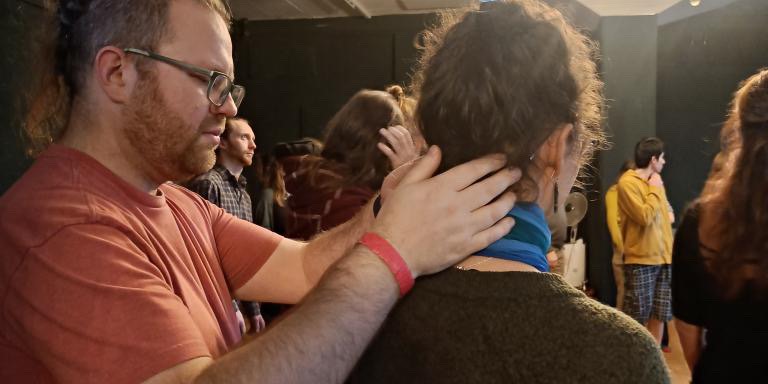
The first lesson we typically go over the principles of the Alexander Technique and apply them to the simple movement of sitting and standing. I ask you to think in various ways so that we can explore how it affects your movement. With your consent, I place "hands on": gentle touch that supports your thinking and learning. We also do "table work" where we use lying on the table as a way to unwind both literally and metaphorically. In subsequent lessons, we explore further how what you are learning can support you in your goals.
Do I need to wear any particular clothes?
Just something you can easily move in. As a lesson may involve lying down, skirts and dresses are best avoided. I will probably ask you to remove your shoes, but not any other items of clothing.
How many lessons will I need?
Much like if you asked this question of a piano teacher, the answer depends on your goals. You could study the Alexander Technique for a lifetime. With my clients, I prefer to work for about 10 lessons on a specific goal. After the first 5, you should have a basic understanding of the technique. And 10 should be enough to become autonomous in applying it on your own.
Can you make lessons more affordable for me?
I don't want cost to be an obstacle to working with me. To that end, I work with at most one person at a time on a pay-what-you-can basis. Please message to find out when I'll next have availability.
What is the Alexander Technique effective for?
In my experience, the Alexander Technique is effective for finding new possibilities when we get stuck. This applies equally to pain, playing and instrument, improving at dancing or running faster. When it comes to peer reviewed research, the Alexander Technique had been found helpful for back pain, neck pain and Parkinsons, among others.
You suggest the Alexander Technique helps with everything. Are you sure you aren't selling snake oil?
This is a question I take very seriously, as I used to be a researcher and am frustrated that the science of the Alexander technique is still in its infancy. There are only a small number of peer reviewed studies on its effectiveness for various conditions (but the studies that do exist are of high quality). The number of papers explaining how/why the Alexander Technique works is even smaller.
My best explanation for why the Alexander Technique is useful across a variety of areas is that it is a "meta-skill" (not a treatment, or a cure) that helps find greater ease and freedom in any activity and in any circumstances. Sometimes that freedom becomes the freedom to change the circumstances. Other times, the circumstances remains the same, but the negative impact on your life is reduced. If you are at all skeptical (especially if you have tried many things to no avail), I'll be happy to discuss your particular circumstances and explain what I think the Alexander Technique might be helpful for, and how we might best proceed if you don't find it helpful after working with me.
When you say "quiet", do you mean "calm and relaxed"?
I do and I don't. When too much emphasis is placed on "calming the nervous system" it can lead to suppressing and bypassing, pretending that we're experiencing no negative or difficult emotions. Instead I'm looking for quiet as in "poised and ready". Like with a cat, there's not much going on as a baseline, but it can change in an instant. We can be angry, we can be sad, we can be anxious. And when those emotions have run their course we don't get stuck with them.